I like taking complicated ideas and simplifying them. It doesn’t get much simpler than a t-shirt. So I have made my own ピーshirts. Slogans and puns with a mix of Japanese, English and philosophy.
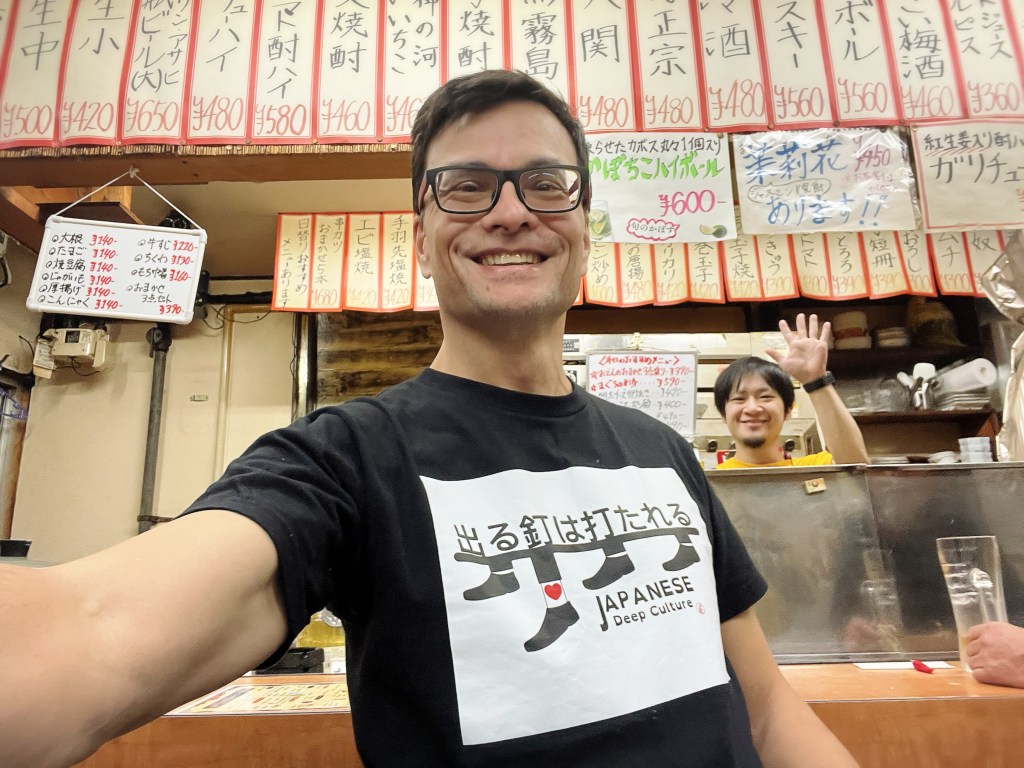
出る釘は打たれる The nail that sticks up gets hammered down.
This is the one that started it all for me. It’s a stereotype about Japanese culture and the drive to conformity. On the surface it isn’t wrong, but deep down there is something else going on. Idiosyncarices are often suppressed, never destroyed. This is the beauty of Japanese Deep Culture. The nooks and crannies of the back alleys where people go to find their own. Down but not out, people will- discreetly- find ways to celebrate themselves.
My next goal is to reestablish this truth as 出る釘は歌れる。The nail that sticks out, still sings.
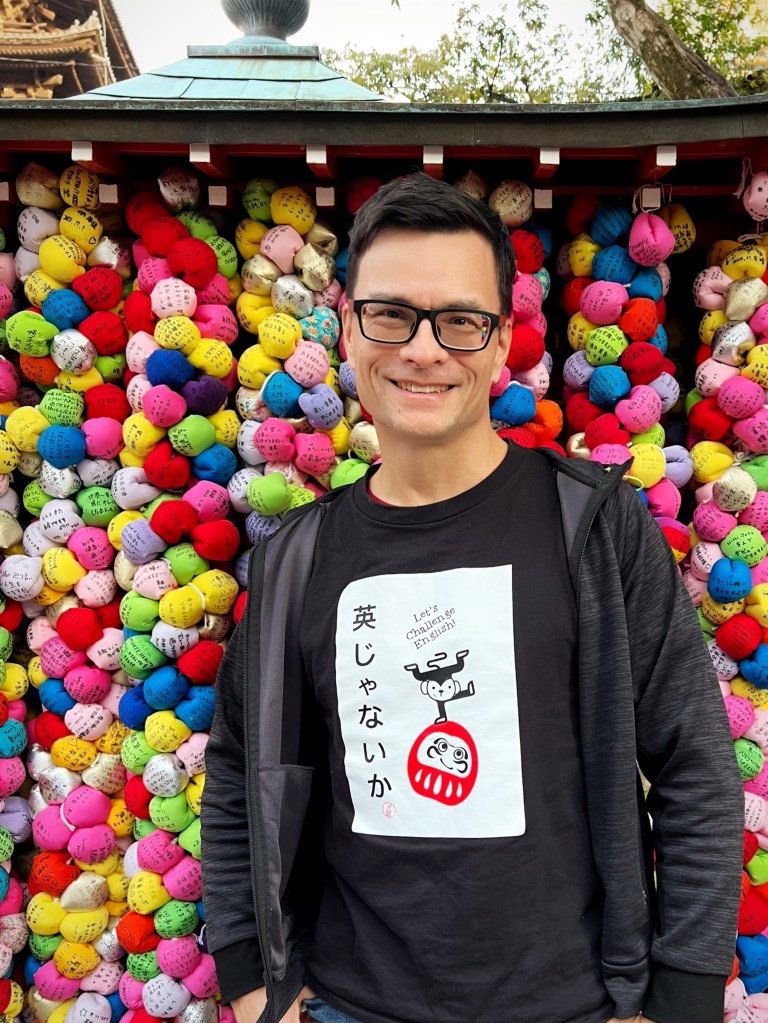
ええじゃないか Why not? This was the chorus of many songs from social and political demonstrations at the end of the Edo period. It was a little bit of a free for all, the key message seemed to be do whatever you need to do, who cares? Why not? I feel the same is true for English. Forget about grades and tests and grammar books- say what you need to say, any way you can say it. It can be a total mess and a beautiful thing at the same time. The important thing is that we are out in the world trying to talk and connect with other people.
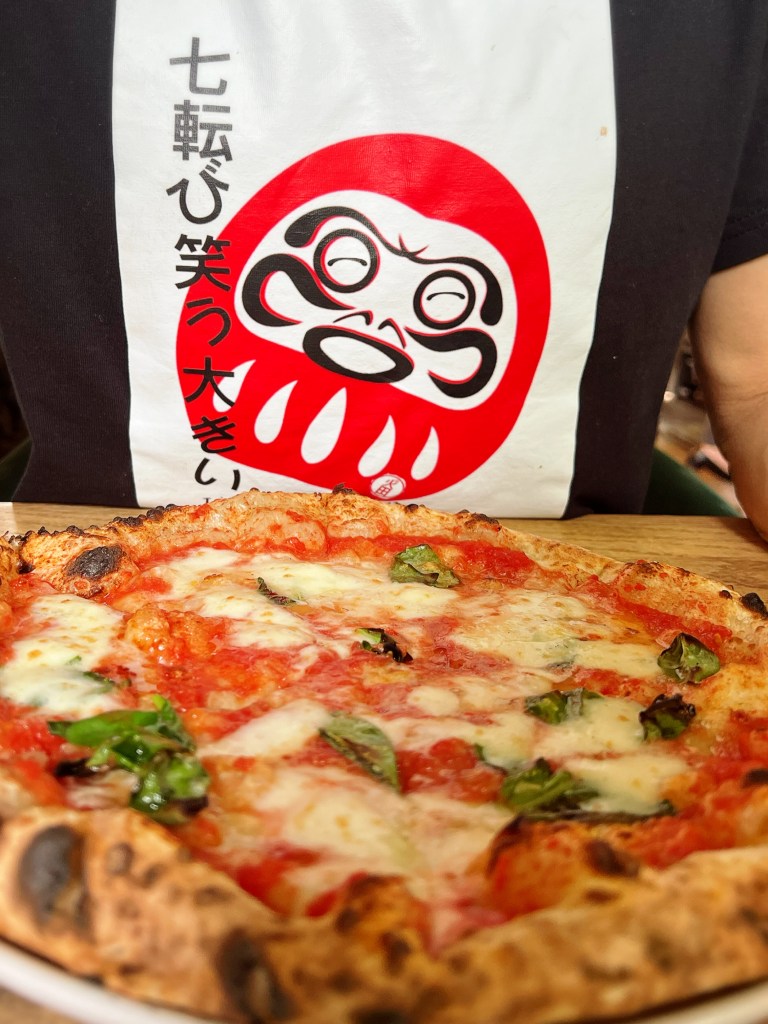
七転び八起き Fall down seven times, get up eight. Learn from your mistakes. I would even say enjoy your mistakes. Especailly when we are trying to speak in a new language, we will make lots of funny mistakes. Not embarassing. There is nothing wrong with trying to talk to people, laugh and enjoy the mistakes you make and enliven your conversations. 七転び笑う大きい。

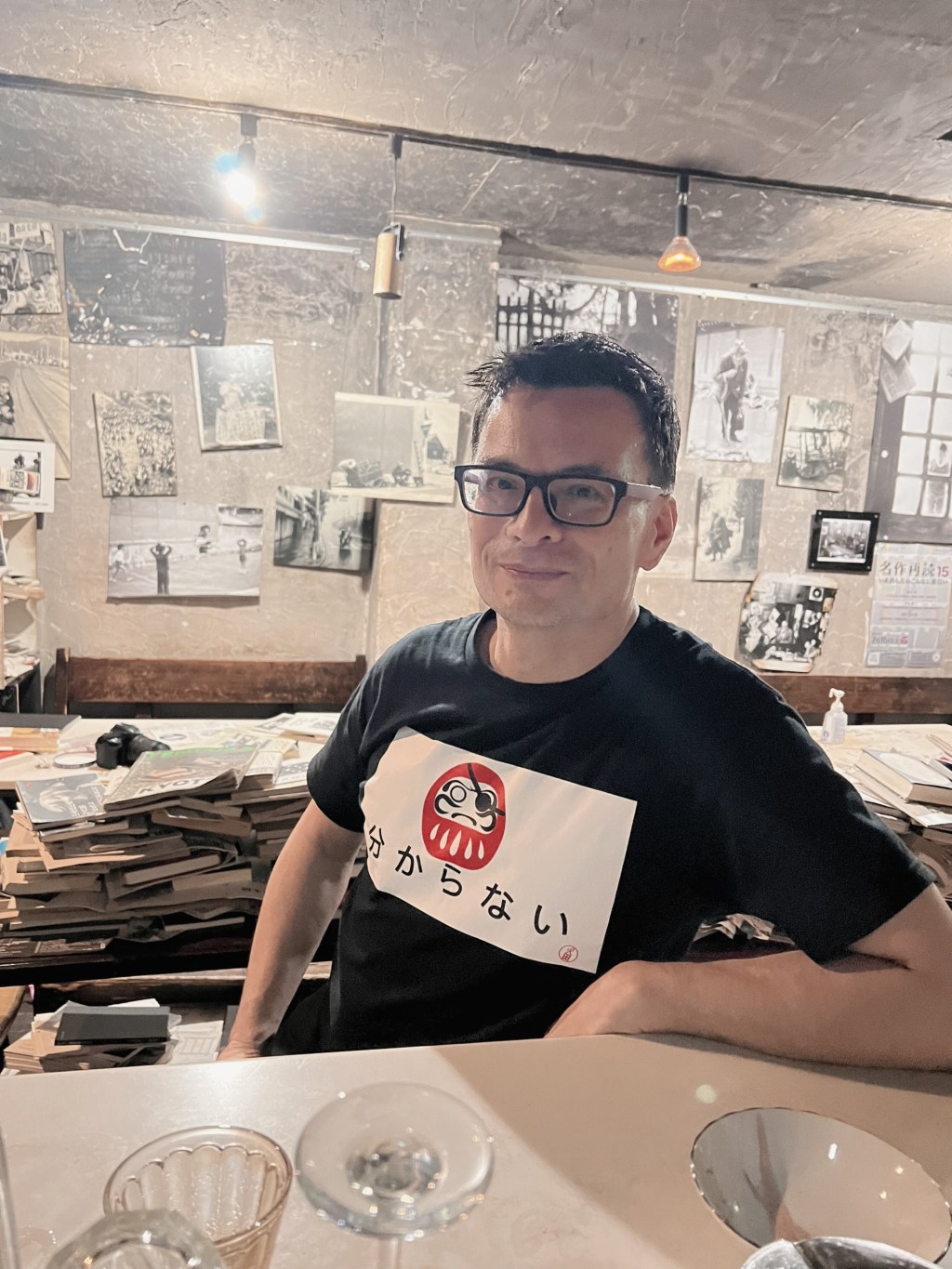
分からない I don’t understand. People often use “I don’t understand” as an easy out. A way to say I wont understand. I give up.
When we make a wish we paint in one eye of the daruma and then we need to work to make our wish come true. If we give up it is like plucking the eye out of the daruma, blinding ourselves to our own dreams.
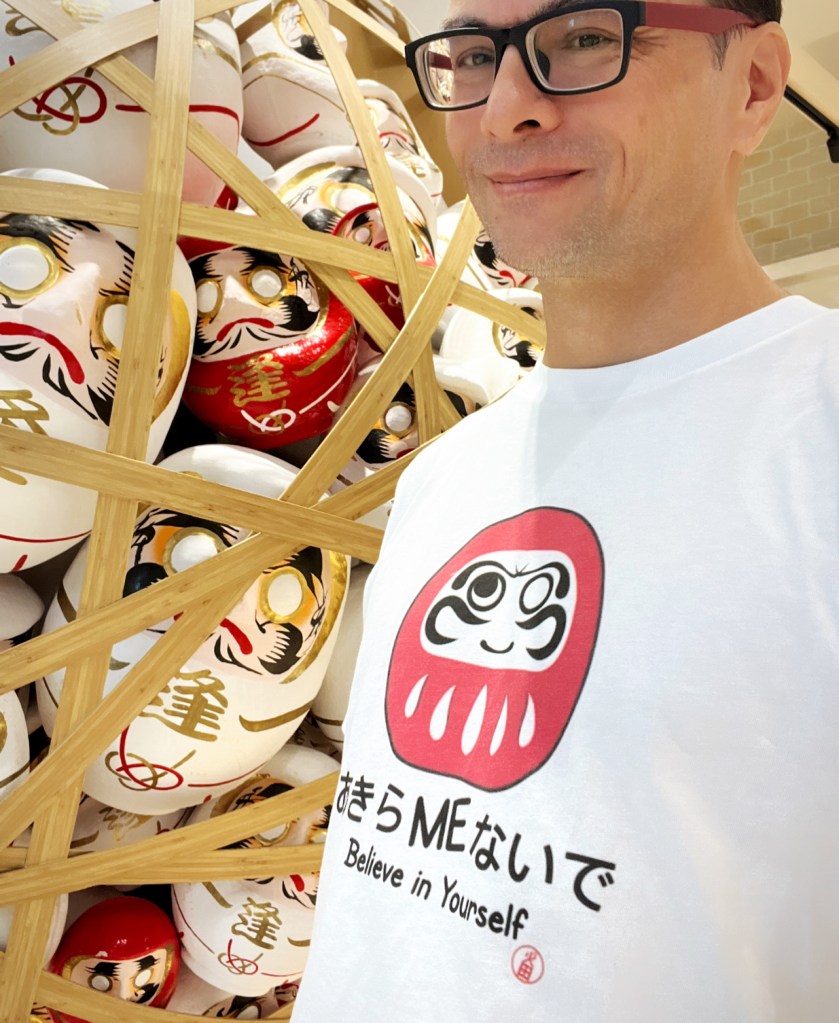
あきらめないで means don’t give up. I changed the hiragana め to its ABC spelling ME to point out the English word ‘me’. Don’t give up on yourself. When you have a dream work to make it true. People use the daruma as a little movtivator, painting in one eye to promise try. I use the daruma as a reminder of a promise I make to myself, to me. I never want to give up on the little guy.

三日坊主 A three day monk refers to people who get an idea and give up on it too quickly and easily. It’s kind of like forcing yourself to exercise by joining a gym, going once or twice and then never getting around to going again. Japanese people had to study English in school whether they wanted to or not. I think they can surprise themselves later in life when a moment comes that they actually want to use English. It doesn’t hurt if that moment is in a bar. The alcohol or simply the atmosphere can help us all relax and take a chance or two. Three days at the Eikai Bar and you will surprise yourself at how much you can do. 三日上手!

英会ばー EIkai Bar. There are lots of English schools in Japan. They are called 英会話、EikaiWA, which sounds a lot like EikaiBA to me. A bar is a much easier place to have a natural conversation- in any language. I hope people can save their money from Eikaiwa’s and use it for a drink or two at the bar, and many many conversations.
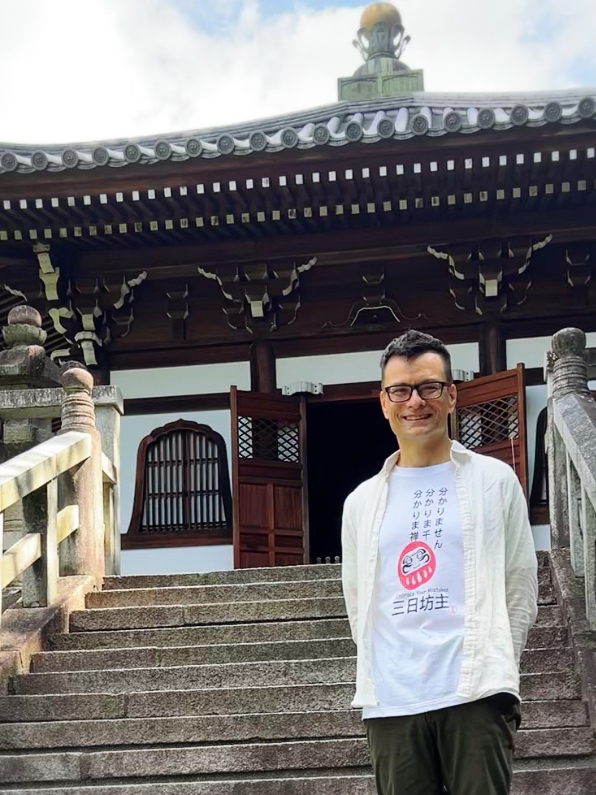
分かりません、分かりま千、分かりま禅 These words all sound pretty much the same to me. Wakarimasen is the real word. It means I don’t understand.
WakarimaSEN includes 1,000. I don’t understand again and again and again. WakarimaZEN includes ZEN buddhism. When we make peace with not understanding, when we perceive at the deepest level there is no understanding- then we can overlook the little things. Embrace imperfection. In our life and in our English.
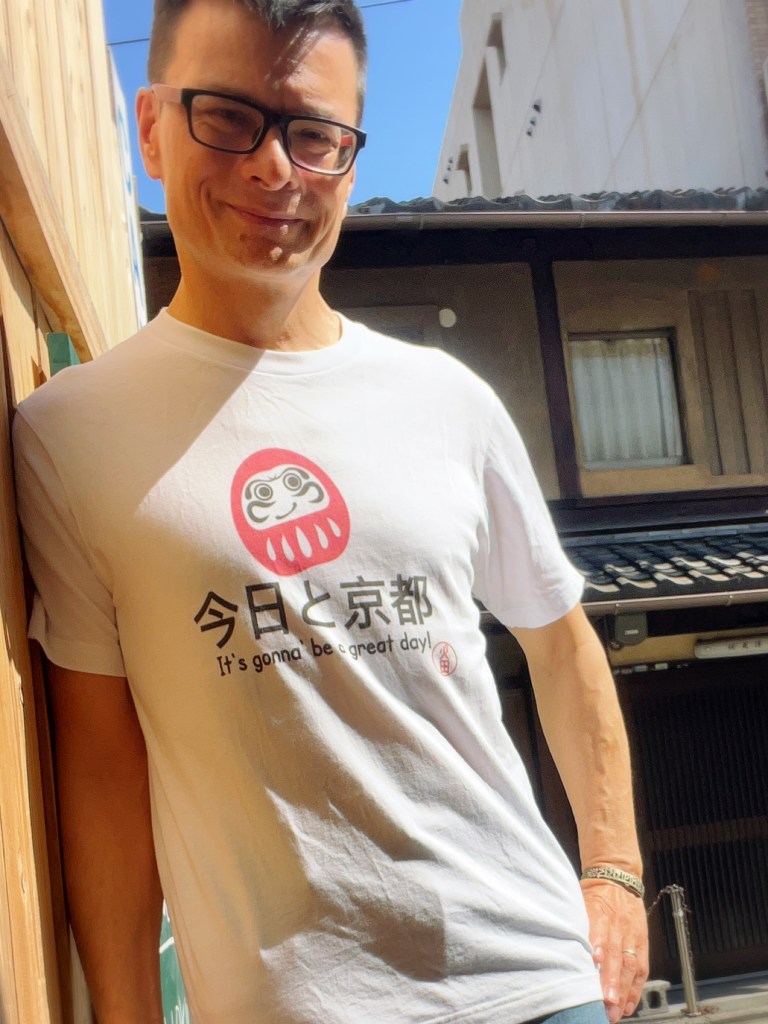
今日と京都 My first Japanese palindrome. Today and Kyoto, Kyo To Kyoto.
I am lucky to live in Kyoto, so it makes sense to enjoy every day.
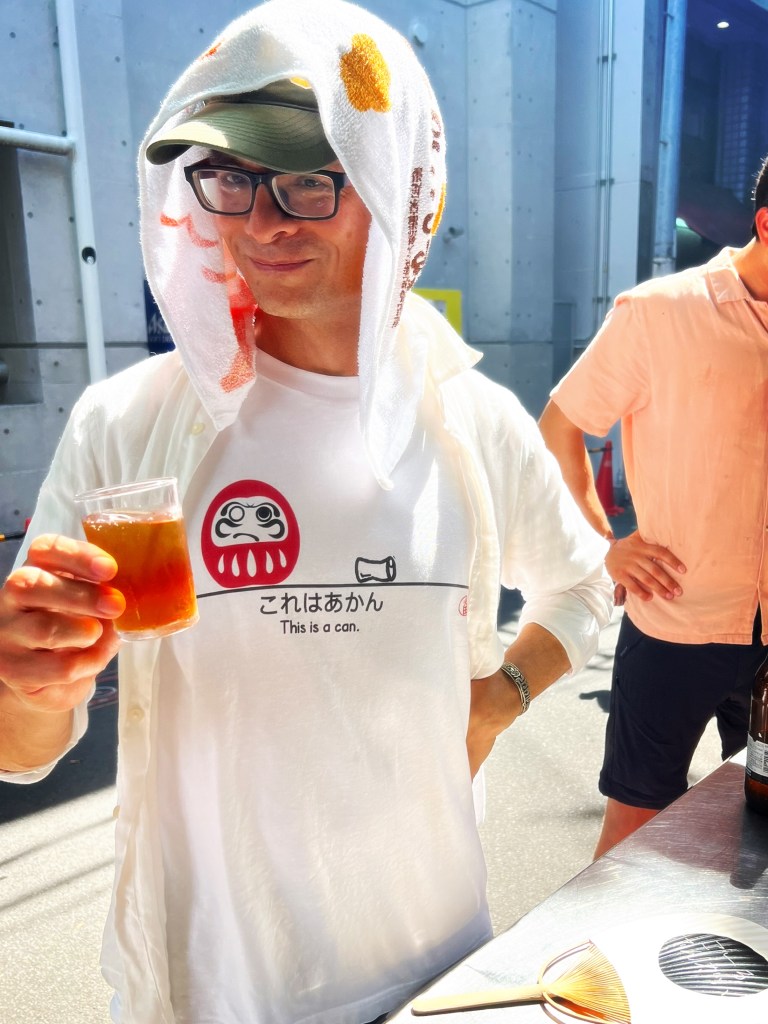
これはあかん, kore wa akan. This is a can. This is a dajare. Akan is a Kansai-ben word. It means, roughly, bad or wrong. The sentence reads “This is bad.” The sentence can sound like “This is a can.” And it is wrong to leave empty cans littering the ground.
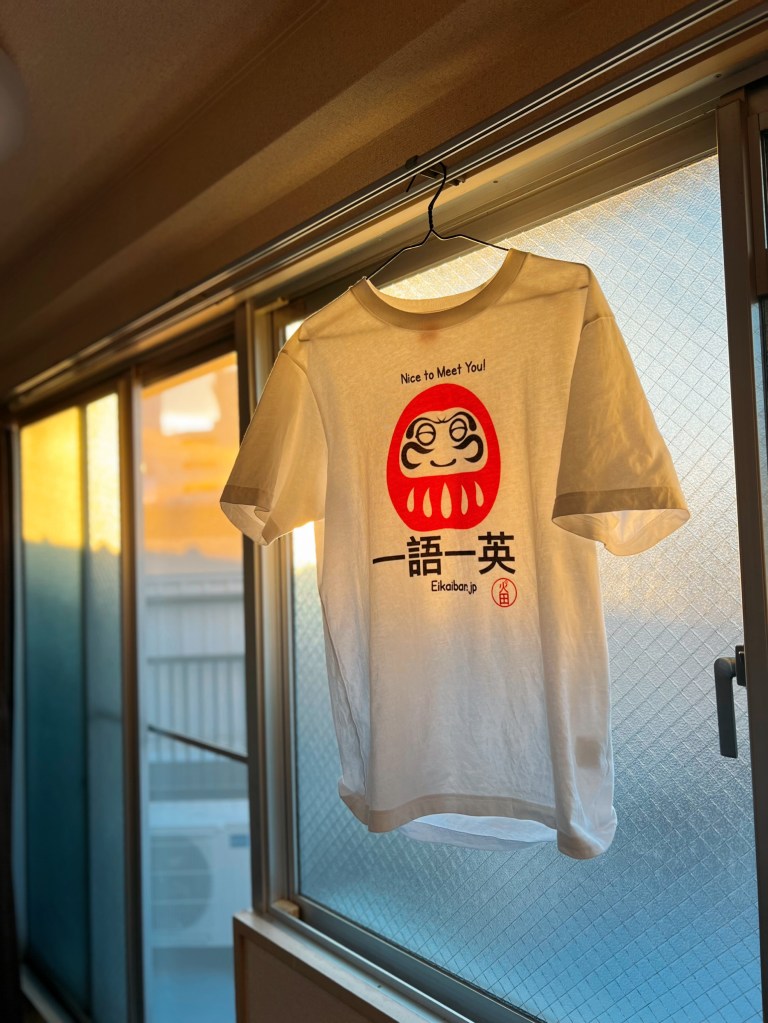
一期一会, Ichi-go ichi-e. The direct translation is: one time, one meeting. It is a reminder to appreciate the unique ‘once in a lifetime’ quality of each moment in our lives. Ichi-go ichi-e is often used to emphasize the special atmosphere of the tea ceremony. I’ve used 語 and 英, the kanji and sounds for English, to emphasize the value of English as an international language. English is everywhere. ‘Hello’ and ‘bye bye’ have become universally understood. Even just these two words is enough to reach out and show kindness to anybody in the world, 一語一英。Thank you.
Under Construction
These designs are still in the planning stage.
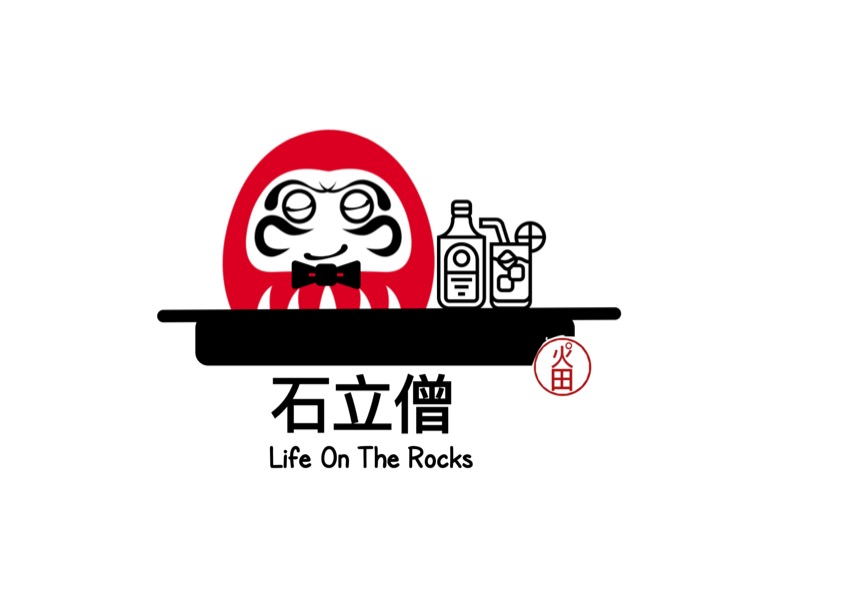


石立僧, ishi-tate-sou.
Not a well known term. Refers to monks who built rock gardens. Bartenders are a little bit like monks in keeping silent and sometimes dispensing wisdom- while serving drinks ‘on the rocks’.
猿も木から落ちる, Even monkeys fall from trees.
I’d like to rewrite the 木 to phonetic spelling to emphasize the sound and have the monkey mispronouncing something. Monkey onomatopoeia may to too unclear. Maybe saying “This is a Nabana” or just “Nabana”. Meaning and mistake are both clear- everythign’s ok. Mitakes happen. Mispronunciation happens.
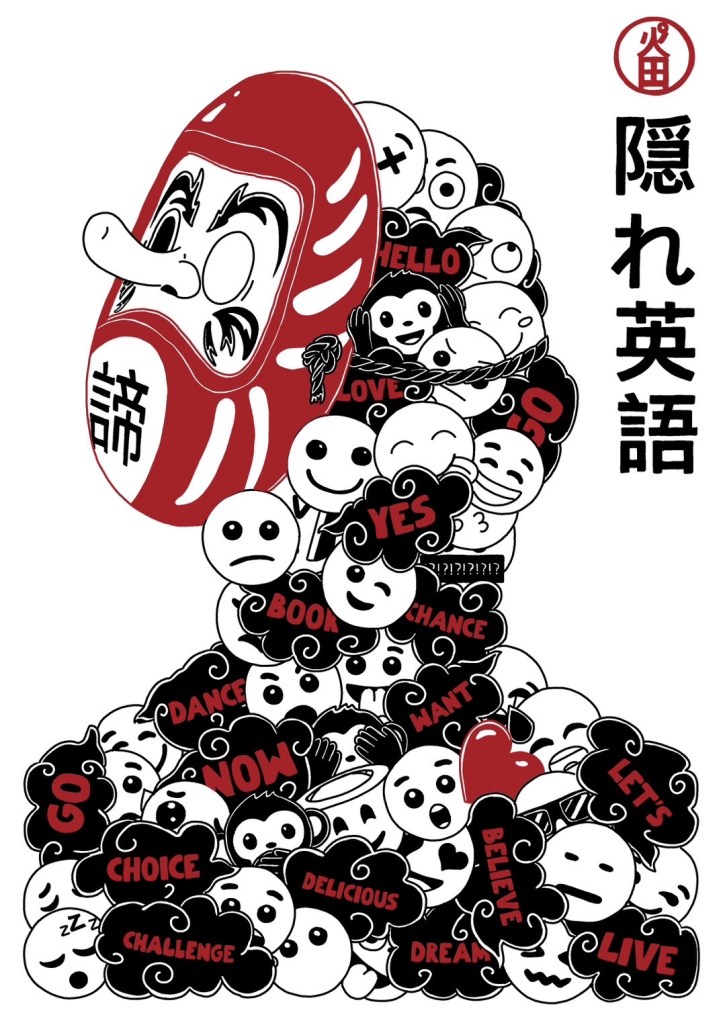
隠れ家, Kakurega. A hideout. 隠れ英語 Kakureigo. The way English helps people express hidden ideas. To say things that are difficult to say directly in Japanese but in a new language or the new context the language provides can be more easily expressed.
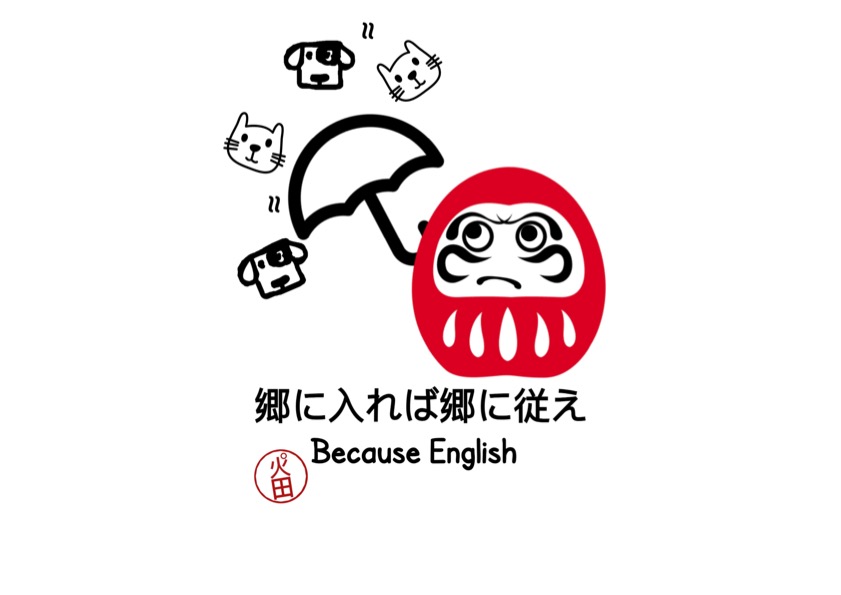
郷に入れば郷に従え, go ni haireba go ni shitgae. When in Rome do as the Romans do. The text for the t-shirt should change the GO kanji to 語。 This suggests a when in English be English feeling. There often is no why for why English or any language follows the patterns it does- or breaks them. It can be better to go with the flow— hmmm, second GO to katakana FLOW? 語に入ればフローに従え. i.e. Don’t get hung up on why it rains cats and dogs, just go with the flow and let the mystery be.
いいね。いぬ。Nice. Dog. Just a silly thing. Maybe a mispronunciation thing, or a misunderstanding thing. Hoping the eyes can suggest a soft conflict, the dog correcting the daruma.
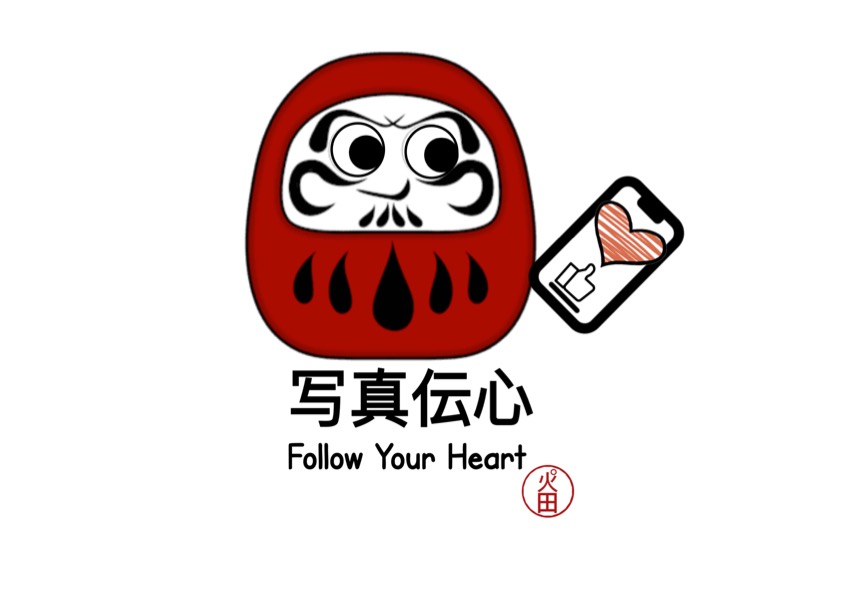
以心伝心 A once in a lifetime moment. Appreciating each moment- and the connection between two people that moment allows. We are losing that in the digital age, replacing human contact with likes and follows. 写真伝心, a fake feeling of connection. ‘HOLLOW your heart’ feels to negative so trying to cheer it up with follow your heart. Like the things you love.
Or just leave it at observing LIKES as the new tea ceremony moment without any commentary.
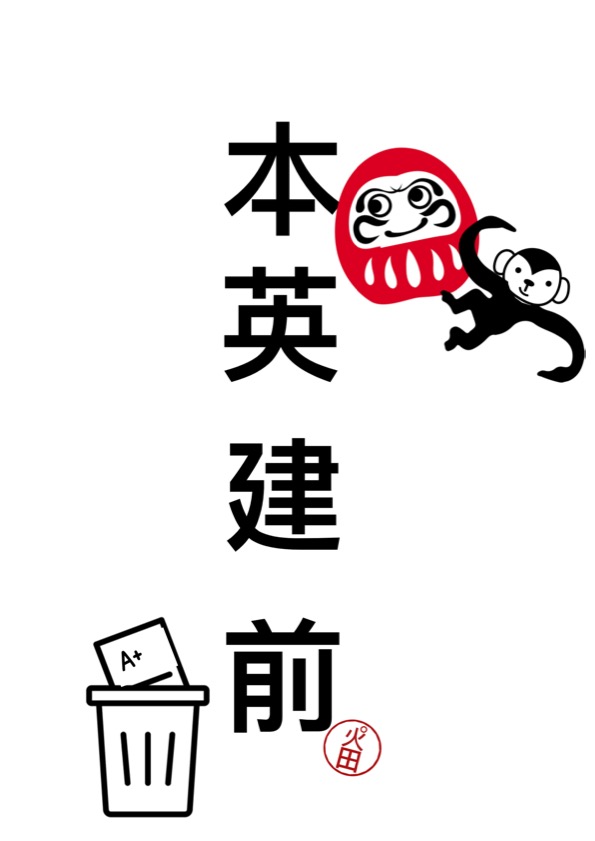
本音建前, Honne Tatemae. The true and the superficial. 本英建前, the real English you use to connect with people vs the superficial English that helps you score well on a test.
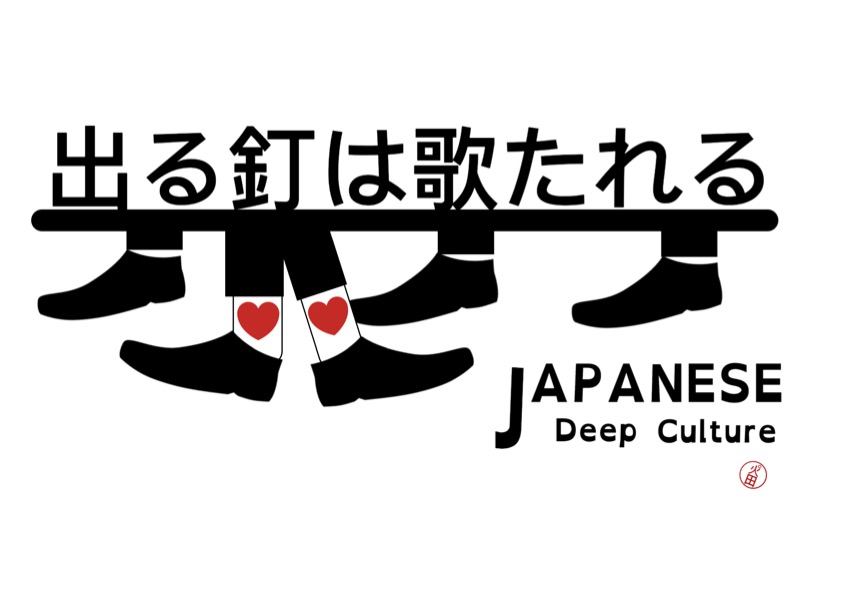
出る釘は打たれる rephrased with song 出る釘は歌たれる down but not out. Deep culture is where the misfits shine and sing.
 英会バー
英会バー 