
Fall down seven times, stand up GREAT! Mistakes are the best. We learn from our mistakes, we laugh at our mistakes, we are better because of our mistakes.
七転び八すげえ!間違いは最高だ。失敗から学び、失敗を笑い飛ばし、失敗のおかげでより良くなる。
We can be proud of our mistakes. We are trying our best, we are not giving up.
We can even enjoy our mistakes, a lot of them are really funny. Let’s change our attitude; mistakes aren’t wrong, mistakes are empowering.
Did you make a mistake today? Give yourself a medal!
私たちは失敗を誇りに思うことができる。私たちはベストを尽くしているし、あきらめていない。
ミスの多くは本当に面白いものだ。間違いは間違いではなく、間違いは力になるのだ。
今日はミスをしましたか?自分にメダルをあげましょう!
DAILY 大丈夫
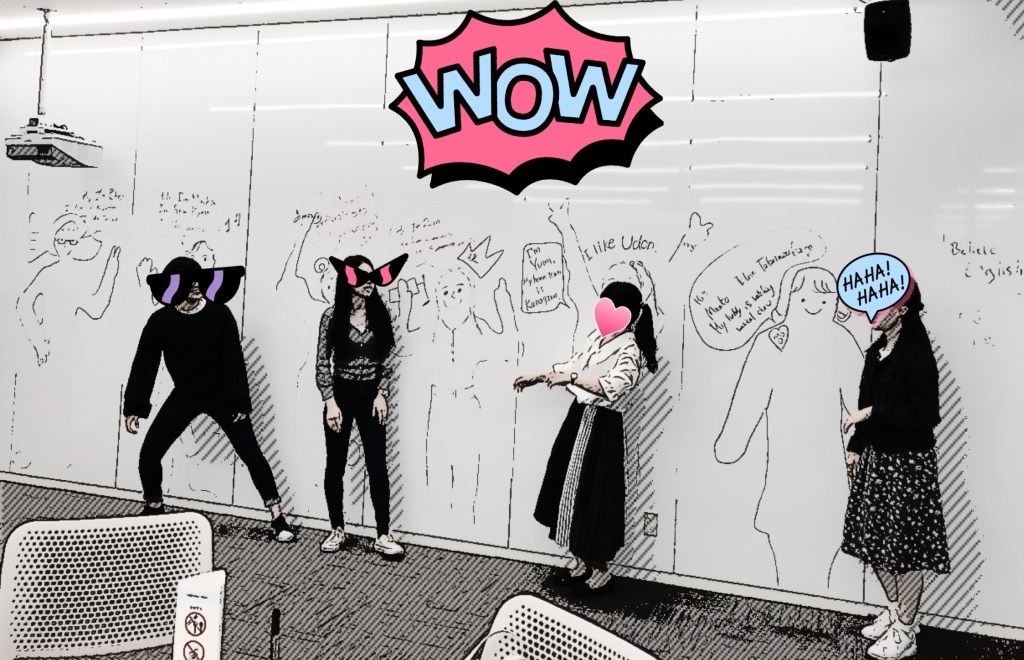
Look and Learn form the World Around You.
Walk down the street and see what kinds of English and what kinds of mistakes you can find in the wild. ‘In the wild’ is another way of saying in real life. The English we see in textbooks is always artificial. Too perfect and so too unreal. Out in the world English is imperfect and improvised, often wildly so. Wild in the sense of unbelievable and wonderful. Truly wonderful, the meaning and the intention it conveys. Sometimes people use the wrong words or sentence structure, and sometimes that prevents understanding. We can fix that. Other times it opens the doors to new understandings. we an celebrate that. And we can always appreciate the effort. These people are trying their best to use English. Is it hard to understand sometimes? That’s ok. Daijobu, daijobu. Thank you for trying and let’s work together to make it better.
I see great examples of this everyday, I bet you do to. Let’s discover a daily daijobu.
We are going to look at examples from the real world of the ways people use English. Most of these examples have something wrong about them. They are from countries where English is not people’s first language. I find them intriguing and enlightening. They really keep me thinking. I hope they will keep you thinking too.
For each daily picture ask yourself these three questions:
Is it understandable?
Is the English wrong?
How would you say it better?
For the big picture, ask yourself does it matter? Daijobu, daijobu. Everybody gets an A for effort.
I’ll tell you what I think for each item, but think for yourself first. Skipping ahead to my answers you will miss out on all the fun.
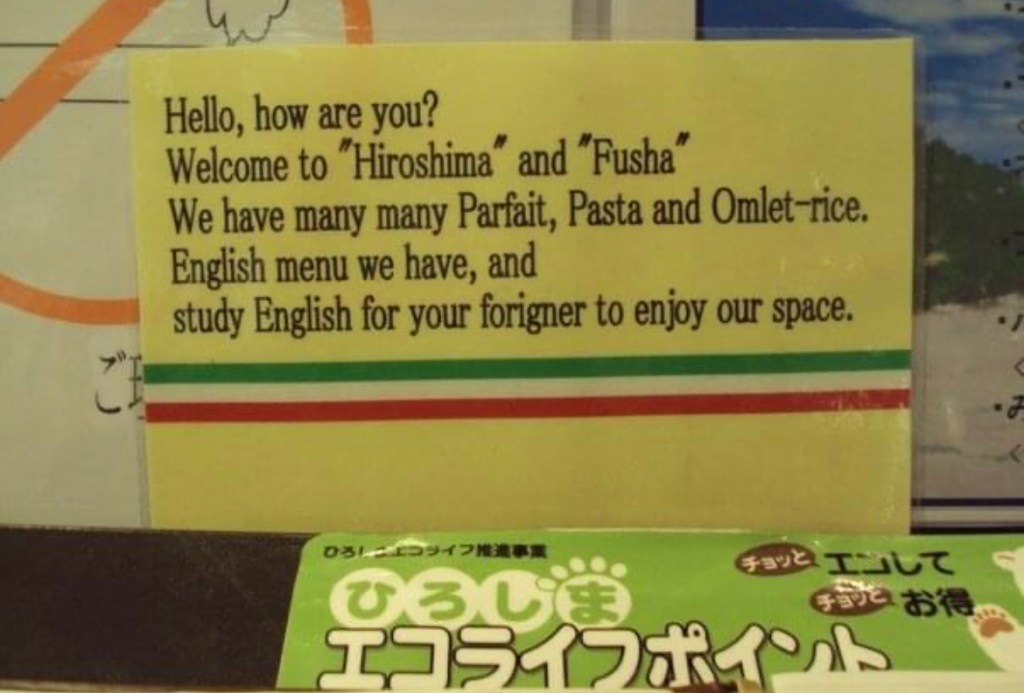
Is this understandable?
Is the English correct?
How would you write it differently?
I found this sign in Hiroshima and I found it wonderful. The English isn’t perfect but the sentiment is.
The English is understandable, they are welcoming foreign tourists to their restaurant and explaining what kinds of food they have.
I would write it this way:
Hello, how are you?
Welcome to Hiroshima and to Fusha. We have kinds of pasta, omelettes, and parfaits. We have English menus. We are learning English to help you feel welcome here.

Is this understandable?
Is the English correct?
How would you write it differently?
This is an ad I saw on the Keihan line in Kyoto many years ago before people had smartphones. I love this ad. It is so simple and clear. And clever. It’s an ad for Lumix cameras with flip screens, so you can preview your selfie.
The English is perfect. The sentence by itself has perfect meaning and in the context of the ad it has even greater meaning. You should love yourself and you should take selfies. I wouldn’t say it any differently. In fact I share this again and again, every chance I get.

Is this understandable?
Is the English correct?
How would you write it differently?
This was a grocery store in Nara, I think. I only wish I had thought of it first.
It is understandable if a bit modest. The name means this is a good store. The English is not correct, it is better than that. -Est is used for the superlative, the thing that is best. Good, better, best. Ok is a synonym of good, maybe a little less good than good. Ok, good, better, best. If this store is the most ok of all the stores than it is really the best. Best Fresh Mart.
I wouldn’t write it any differently though. Certainly not Best Fresh mart, that is predictable and boring. Okest stands out and is easier to remember because of the novelty of the name. I think too it is fitting for Japan. It may not be ok to say you are the best. But it is fitting and modest to simply say you are the Okest.
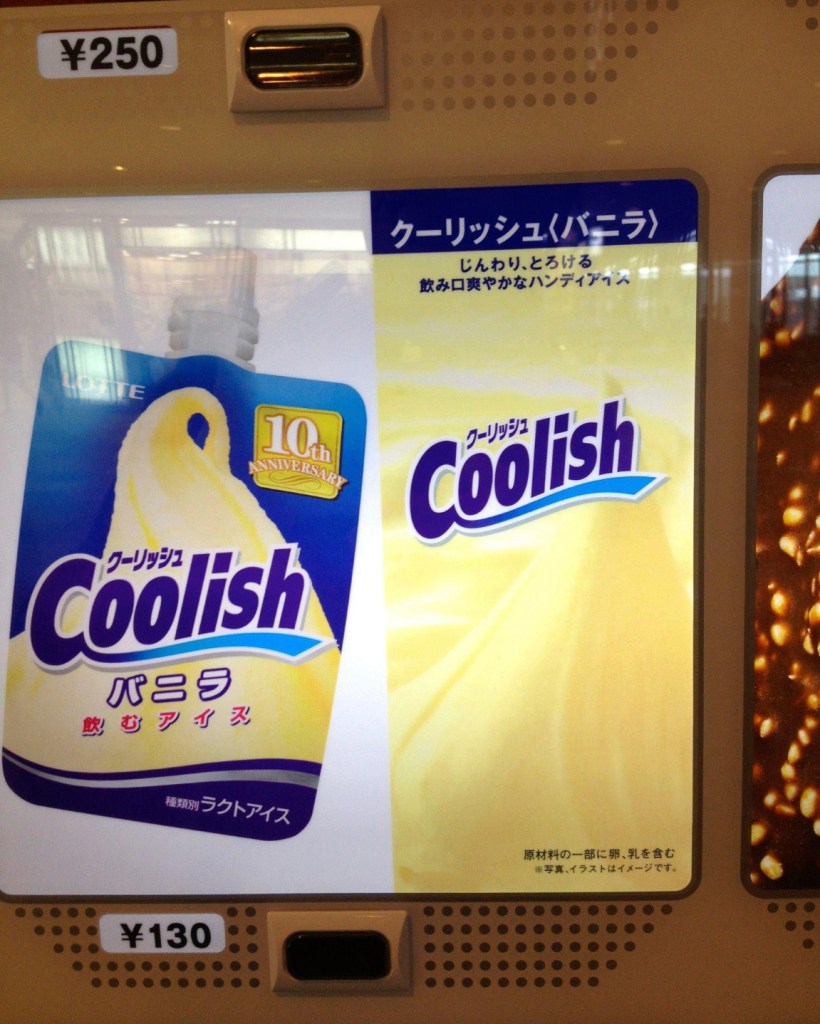
Is this understandable?
Is the English correct?
How would you write it differently?
You’ve probably seen this around. It is everywhere, and pretty good I think. ‘Coolish’ is understandable but a little bit confusing. It sounds like the ice cream is broken. It isn’t as cold as it should be. The English is correct, though we don’t often use -ish with temperature words. I would say ‘cooling’ instead of ‘coolish’. Coolish describes the ice cream, perhaps it is because the ice cream is soft. Cooling describes how you will feel eating the ice cream.

Is this understandable?
Is the English correct?
How would you write it differently?
I saw this ad in Kyoto and it made me laugh out loud. I understood it right away, though I wonder if Japanese people can understand it. Can you? The English is not correct, it should be zero romance. I would say Zero Romance. I think I would need to add in some small print explaining it though, perhaps it is there in the Japanese text already. The small print would explain why there is zero romance. The mattress is so comfortable that you will fall asleep right away and there will be no time for romance.
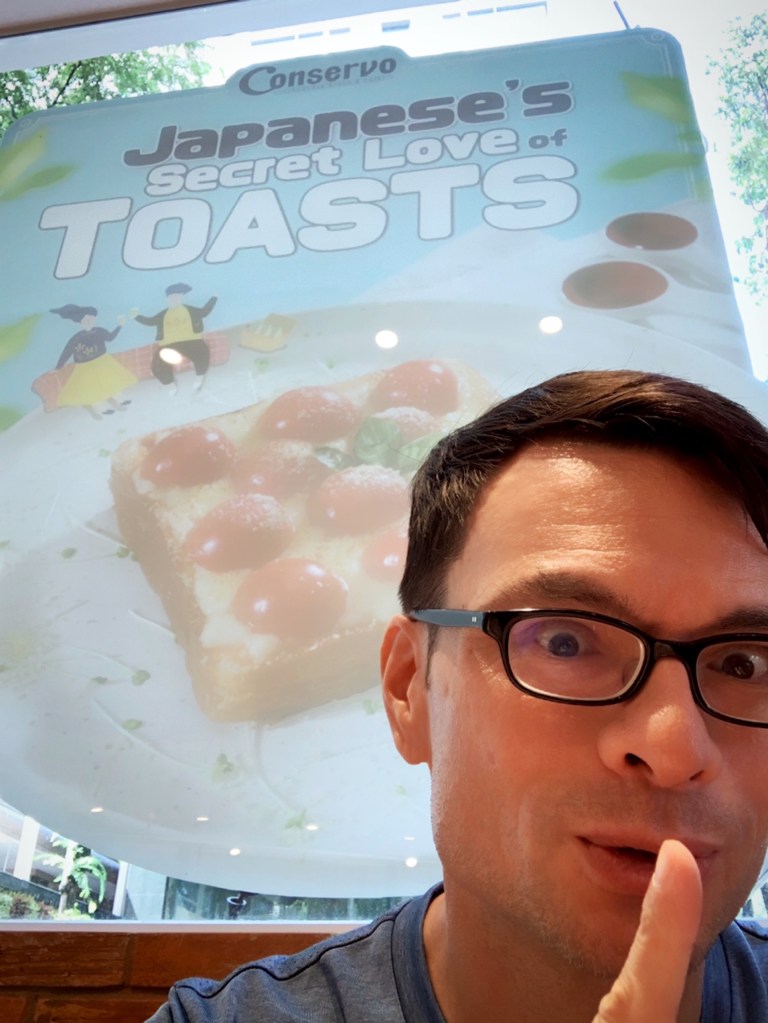
Do you know the secret Japanese love of toast? Don’t tell anybody! It’s a secret. And it’s rude to talk with your mouth full.
Do tell everybody about Daily Daijobu. And tell us about the signs and language you hear and share it with us on our special DAILY 大丈夫 page.
 英会バー
英会バー 