
Read.
Read, read, read ,read ,read.
Read books.
Don’t read the internet, not to learn English.
People are very lazy and very careless on the internet. There are too many mistakes online.
Books take time to write. People who write books are very careful. Books have editors. Editors check the books and correct all the mistakes before the books are published.
Books will show you what English is supposed to be. English that follows the rules. This is the English you want to learn first.
You can read books at your own pace. You can read them again and again. You can stop reading a book to look something up. Books will wait for you. Books are patient, books are kind.
Reading books is the way English speaking people get better at English. It’s even the best way for English speaking people to prepare for all the tests they have to take. It’s the best way for you to prepare for any English test you have to take. You don’t have to read about the topic of the test. You just have to read. When reading is normal for you, the rhythm and patterns of English will become normal to you. You will be able to hear what sounds right and wrong in English just like native speakers do.
When reading is normal for you, English will be normal for you. It will be easy for you. Something you do without thinking. Something you do with joy.
These are a few books I like to recommend to people.

The Mother Tongue
In The MotherTongue by Bill Bryson looks at how English became English. It is a crazy story which helps explain why English is such a crazy language.
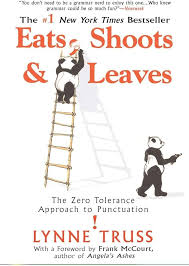
Eats, Shoots & Leaves
Some of the books I am recommending might be a little hard to find. Eats, Shoots &Leaves is everywhere. It has even been broken up into little pieces and been made into a children’s book. It’s a fun book to read, the author is from England so you will see some interesting differences in the way English is understood between us and them.
The book is a good example of learning about something and not studying. It is about grammar, but it’s not about rules and you don’t have to memorize anything. Reading it you appreciate and enjoy English. English is crazy, and the insights this book offers help us understand and learn how to get along with English on its own terms.
The picture is from Amazon.com. This is a great place to look over books. The reviews are mostly thoughtful and you can often look inside at the first few pages. You also have a chance to discover other books that talk about similar things. Enjoy!
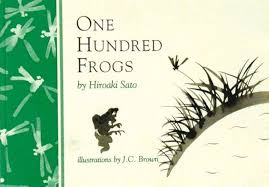
100 Frogs
One Hundred Frogs by Hiroaki Sato looks at a famous haiku by Basho. You have probably heard this poem about an old pond and a frog jumping in.
This is the cover to an older version of the book which has 100 different English translations of the Japanese original.
It’s a haiku (5-7-5) so the poem and the translations are very, very brief. I thought the book was perfect like this. Just looking at all the different ways people expressed the same idea in English. For you and me as students of English it is just perfect. If you can find the original book- snap it up. The newer versions I have seen have only thirty translations and then lots and lots of text about Japanese poetic forms.
That’s fine, but all the talking takes the magic away form the fresh experience of the poem. Ironically, that staying in the moment is what the poem was all about to start with.
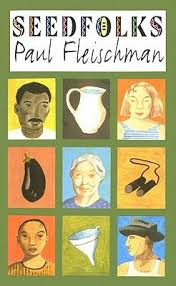
Seedfolks
This is the story of how a community garden came to be. Each chapter is one person’s story of how they stumbled upon and became involved in cleaning up an empty lot and slowly changing it into a garden. It is a very short and simple story, and also very insightful. About people and especially about what it means to immigrate and live in America. I can read the book in about 30 minutes. And I often do. You could probably read it in about two hours. What a great way to spend an afternoon in a cafe.
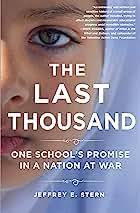
The Last Thousand
The Marefat School in Kabul is all about determination and hope. The Last Thousand describes the achievements of the school in the uncertainty of war, occupation, and an increasingly threatening tomorrow. It traces a long ago history of Afghanistan and the prejudices that came out of that history. It looks at the recent chaos, what it has done and may yet do to Marefat. It is a little bit complicated, and sad, and inspiring, and encouraging. It will make you want to become a teacher.
I am honored to know some of the students of Marefat. I am humbled by their resilience. There is more to say, but there are not words to say it.
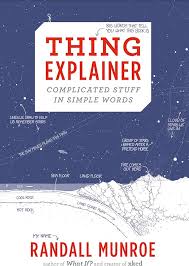
The Thing Explainer
This book tries to explain very complicated things with very simple words. The author, Randall Munroe, has a very interesting website xkcd which answers some impossible questions with slightly more complicated words.
In The Thing Explainer he limits himself to what he determined to be the 1,000 most commonly used words in English.
It’s a pretty cool idea, and very helpful for us. He has even posted a sentence filter to help us explorer writing simply too. Warning: simple words can still make very awkward sentences.
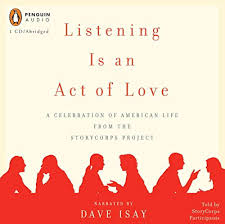
Listening Is An Act of Love
Listening is an Act of Love is a collection of interviews from the StoryCorps project. StoryCorps take a mobile recording studio around the country and helps people interview each other. The purpose is to create an oral history of the United States. Listening opens the door to understanding and compassion. We can’t really care about every single human on the planet, but Story Corps helps us remember that we would if we could. All the interviews are archived in the US Library of Congress and many of them can be heard on the StoryCorps website. Some have even been animated.
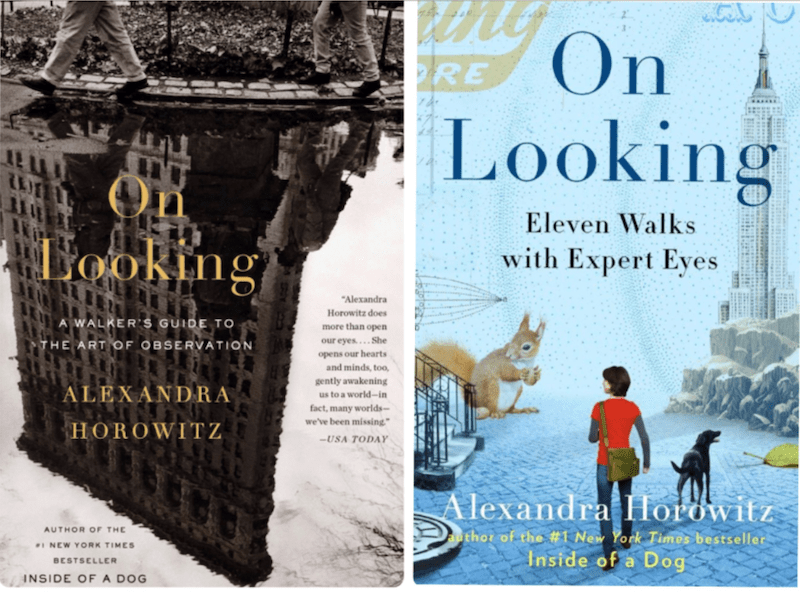
On Looking
Alexandra Horowitz walks around her block with eleven different people. Well, ten different people and a dog. Each has their own way of seeing the world, and each walk becomes a very different journey.
Seeing the world through another person’s eyes, especially seeing your own world through another person’s eyes, is like learning another language. Each thing appears the same but they use completely new and different words to talk about it.
Maybe better than reading the book, do it yourself. Grab a friend who studies insects and walk around the block with them. Walk with a kid, walk like a kid down low to the ground. Find the oldest person in the neighborhood and get a peek at the invisible past that shapes that they see at every door and alley.
Interestingly the book itself has been seen differently. The blue cover on the right was the original image and title, and now it’s the photograph of the Flatiron Building reflected in a puddle. Why did that happen? What competing visions of New York can we see in these two covers?
 英会バー
英会バー 