Here is the vocabulary super secret: READ BOOKS.
A lot of people won’t read books, so let’s start with just a word. Let’s look at how to get from word 1 to word 1,000,000.
If you can say “yes” and “no”, you can say anything.
That’s what computers do. Computers talk in binary code: 1’s and 0’s.
Yes and No. And voila! Netflix.
Begin with a single word. Write the word down.
How many synonyms can you find for this word?
How many antonyms?
Write them down.
Synonyms mean almost the same thing: good and ok.
Antonyms mean something very different, something NOT, the opposite: good and bad.
Write ten words to describe your word.
Do not use any of the synonyms or antonyms.
Use some of the 10 words to write a definition for your word.
Like this:

See that? The best way to increase your vocabulary is to make connections between words. It is difficult for our brain to remember single, isolated words. Our brains remember by making connections.
If I just tell you to remember a word- DOG. It is easy to forget. Where do you put it? Why is it in your brain? But if you have a dog and your dog’s name is Bob. I can tell you, “Bob is a dog.” Now the word “dog” is easy to remember because it’s Bob. Bob is your dog. You love Bob. Your brain is happy to have this new word to talk about your… DOG! Bob. It is a very powerful connection.
Beginner Level Vocabulary
Use the things around you to improve your vocabulary. The things you touch everyday will be the connection to help you remember these words.
Write words for what you can see, and then use those words in sentences.
1 Put 5 things on the table in front of you.
2 Write the English word for each of these things.
3 Use each word in a sentence.
4 Use the sentences to tell a story.

Teacher Talk:
Encourage students to use English to talk about the things they see and touch every day. Make it obvious. Have them see, touch, and name those things. Have them write a sentence about those things. Put those sentences into a story. My story is simple. I simply reordered my sentences and added one more to help end the story. Your students could start there and then help each other polish things up a little bit.
My original story: My phone is white. My hat is black. I like my hat. I have a pen. I write a story about my black hat.
A polished version: I have a pen in my bag. I can write a story about how much I like my black hat.
Every day when the students see those things, they will remember the words, the sentences, and the story. They will be thinking in English!
Intermediate Level Vocabulary
At the intermediate level you may be studying because you have to study. Let’s make lemonade out of those lemons. Use the words you ‘have to’ to write a story you ‘want to’.
1 Open your textbook.
2 Pick 8 words from your textbook.
3 Put each word in a sentence.
4 Use the sentences to make a story.
Teacher Talk:
There will be words your students ‘have to’ know. They will hate these words. We can learn to love these words by putting them in our stories and making them our words.
I have my students mix their sentences up. People will get words they don’t know and their friend will need to explain the word. Then they will need to use that word to fit it into their story. All of this is making stronger and stronger connections. It will also give your students the felling that they learned these words to tell their story. A story they will remember and cherish.
Advanced Level Vocabulary
Now comes the tricky part. Finding the words that are not there, reading between the lines. This way of looking for words gets us reading and thinking about the reading, looking for what it tells us that isn’t in the text. We will need to learn new words to describe our new insights. We will get a chance to use those new words by writing our own stories and talking about what we want to talk about. These are the connections that last forever.
Teacher Talk:
You see what’s happening here? We are creating new vocabulary to summarize the information in the textbook. We are also applying the vocabulary to summarize the ideas that are in our heads.
We get people reading, interpreting and creating.
And making synonyms. A summary is kind of like a big synonym. ELITE is the synonym for the whole description of the professor. We love synonyms at Eikai Bar.
You can follow this link for more SYNONYMS.
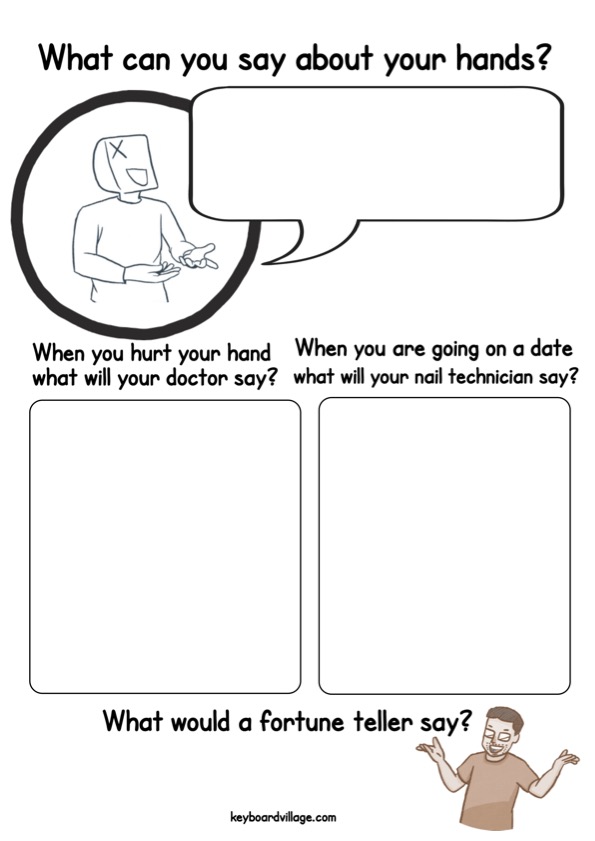
You can try this worksheet for something like a synonym. Something a little more interesting. Describing the same thing from different people’s points of view.
 英会バー
英会バー 